The living room is the beating heart of every home — the space where families spend most of their time and the first place that captures guests’ attention. One of the simplest yet most effective ways to transform this space is by choosing the right wallpaper. The color, pattern, and material of your living room wallpaper can single-handedly define your interior style, turning an ordinary space into one that feels warm, elegant, and modern.
In this guide from Extreme Walls, we’ll explore everything you need to know about selecting the perfect wallpaper for your living room — so you can create a space that truly reflects your taste and personality.
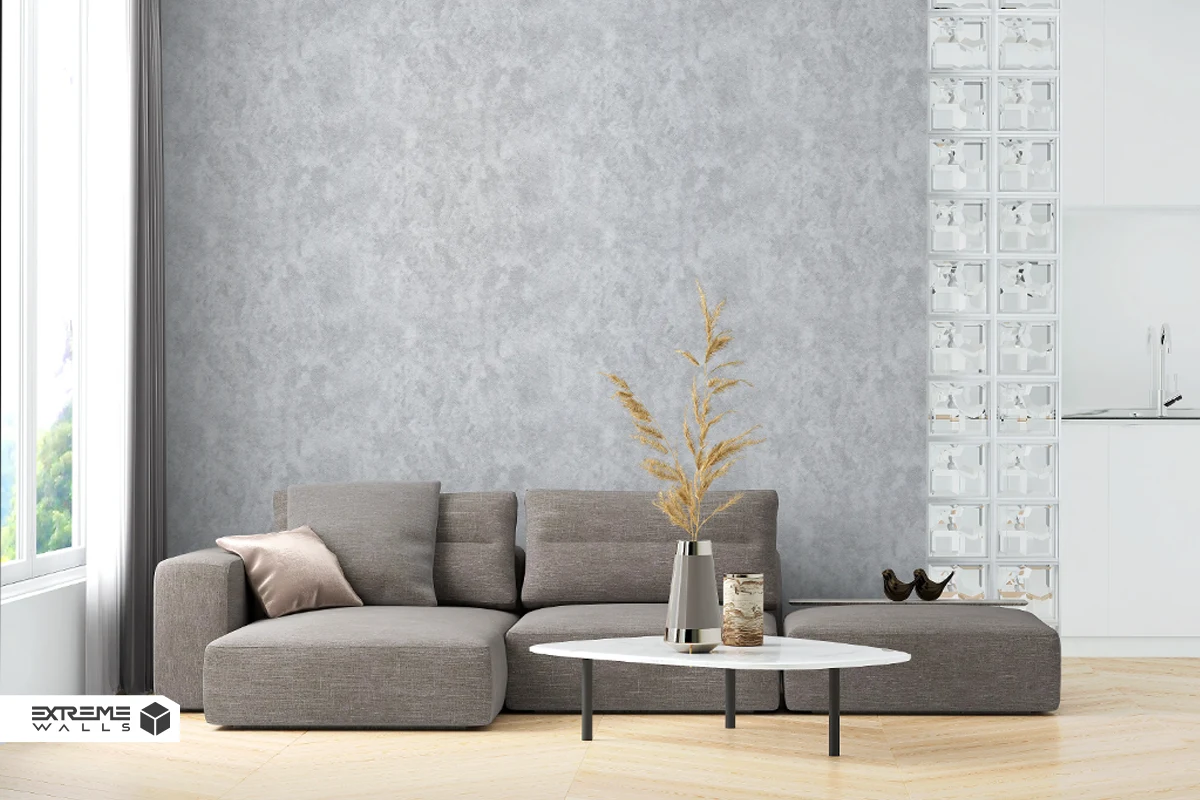
Choosing the Right Wallpaper Color for Your Living Room
Color is the most important factor when designing a living room, as it directly affects the mood and visual perception of the space. Since the living room is a gathering place for family time, watching TV, and socializing, the wallpaper color should be both soothing and inviting.
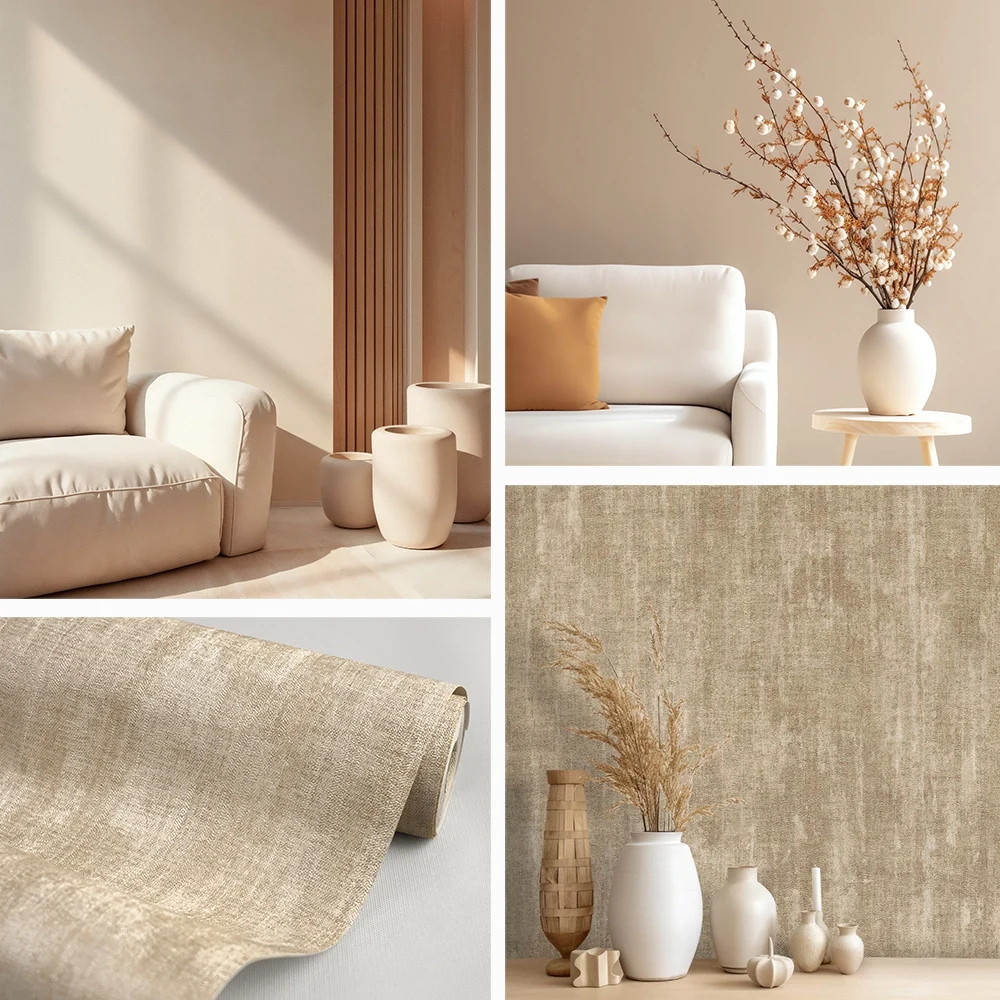
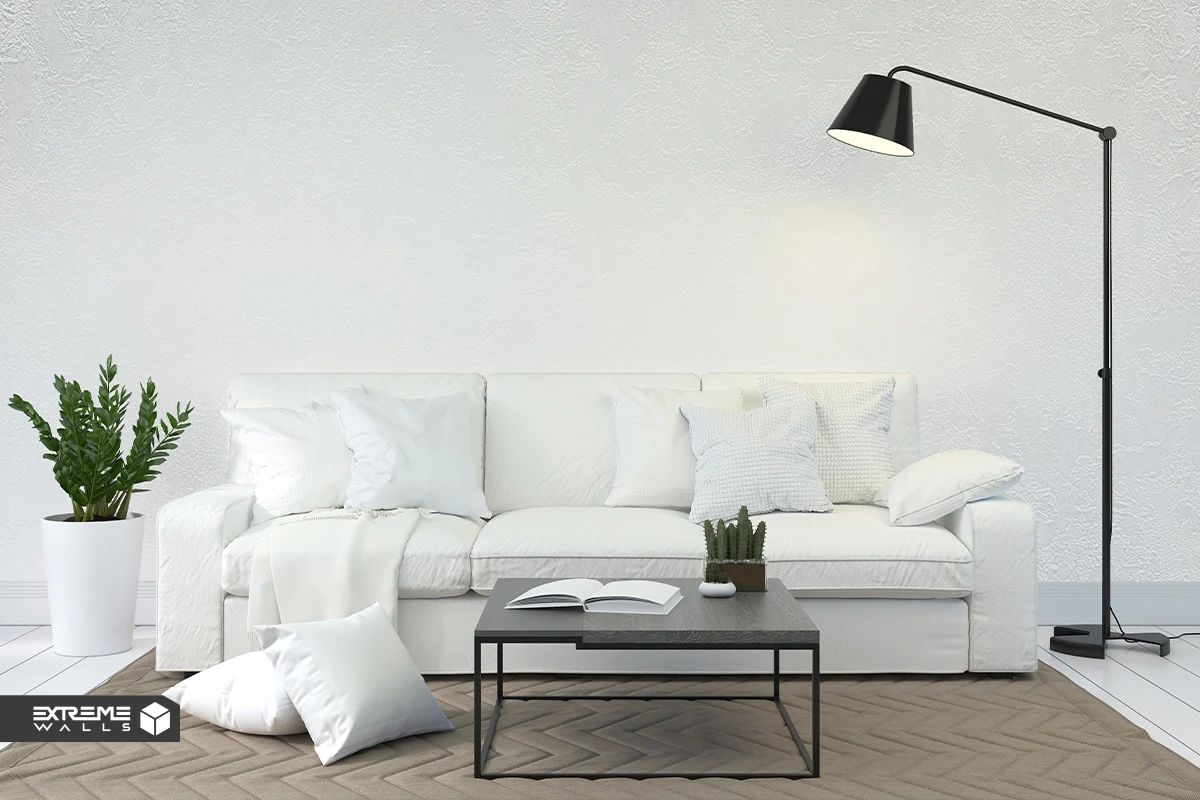
- If your home has a small or windowless living room with limited natural light, light and neutral colors such as white, cream, or light gray are your best choices. These shades make the space appear brighter, airier, and larger than it actually is.
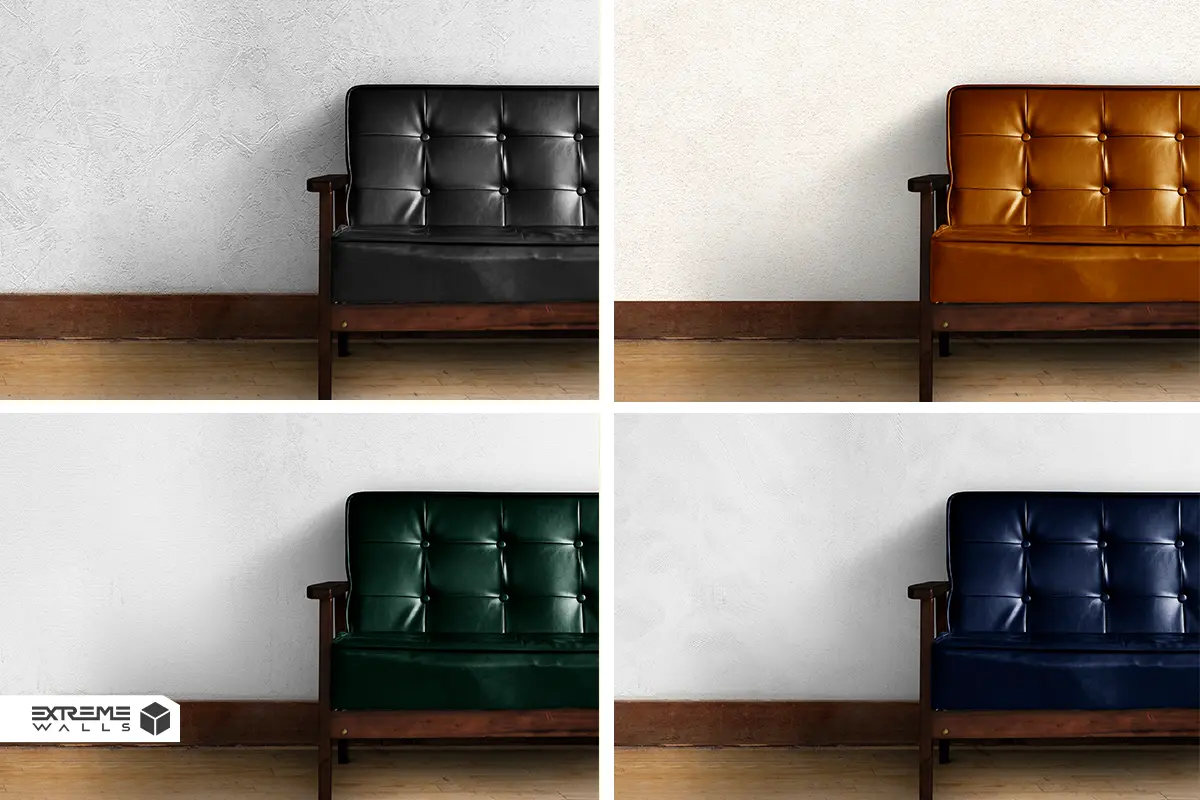
- On the other hand, if your living room is spacious and filled with natural light, warm and rich tones like beige, olive, or chocolate can create a sense of luxury and coziness.
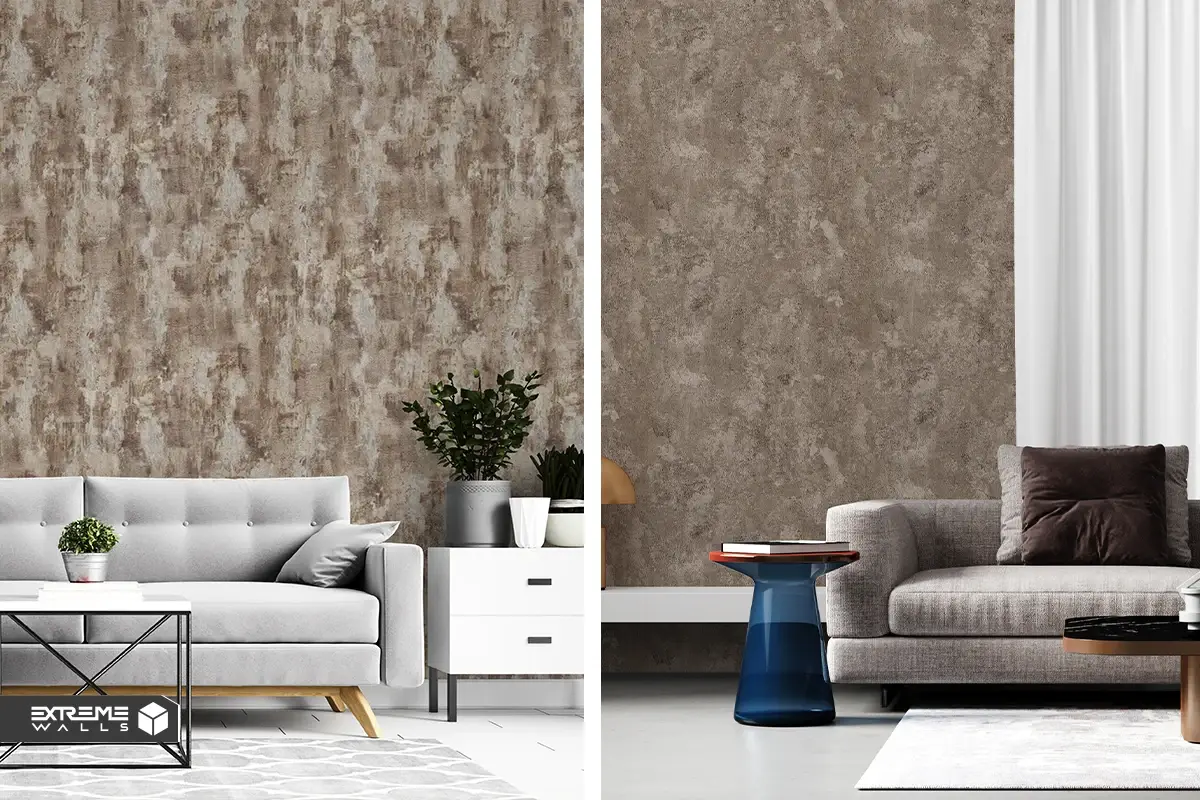
- To achieve visual balance, consider mixing neutral wallpapers with those in warmer or metallic tones — for instance, covering the TV wall with beige or light brown wallpaper and the remaining walls in cream tones.
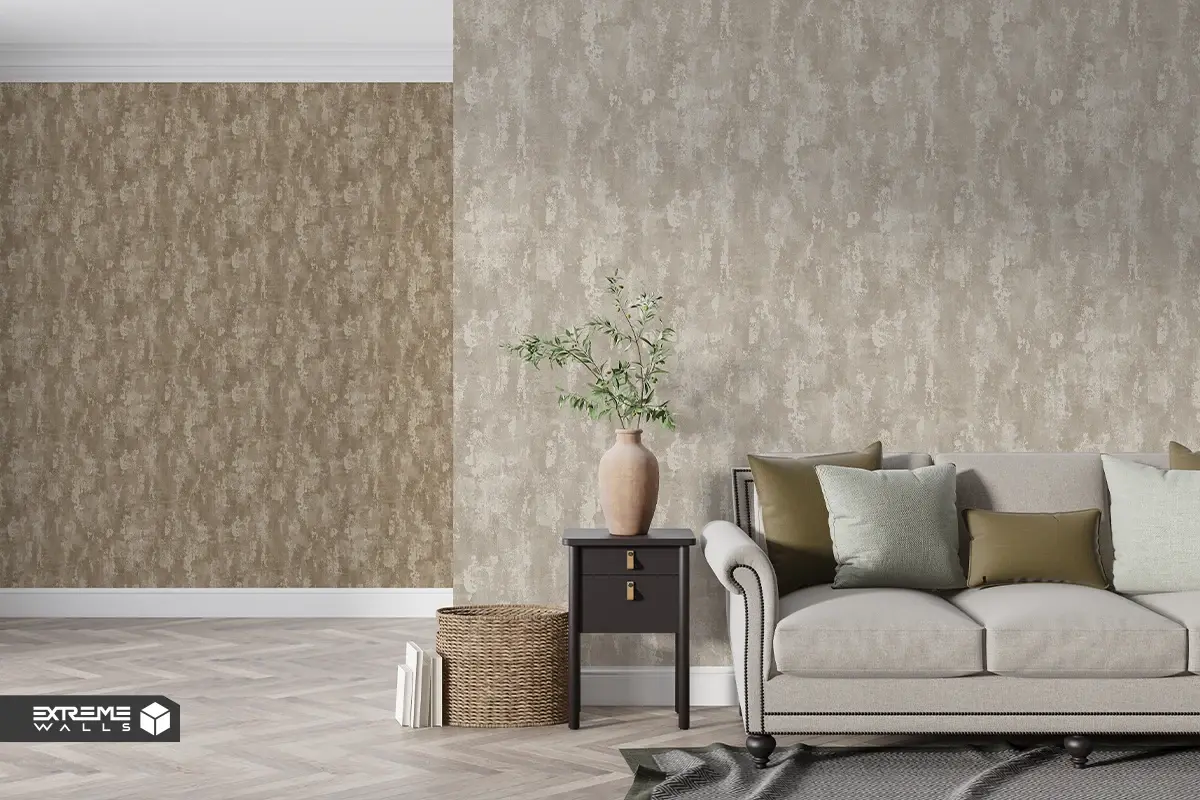
- In modern or minimalist décor, simple wallpapers with subtle textures in shades of gray, cream, or white are popular, while richer and darker colors suit classic or neoclassical designs. Ultimately, your wallpaper color should harmonize with your furniture, flooring, curtains, and lighting to maintain a cohesive look.
Choosing Patterns and Designs for Living Room Wallpaper
After color, the wallpaper pattern is the main element that defines the personality of your living room. Each pattern conveys a different feeling — from calmness and simplicity to grandeur and energy.
The right pattern should align with the room’s size, lighting, and interior style.
- For small or dimly lit living rooms, opt for modern, minimal patterns with delicate textures or subtle patina effects. These add depth without overwhelming the space, making it appear more open and balanced.
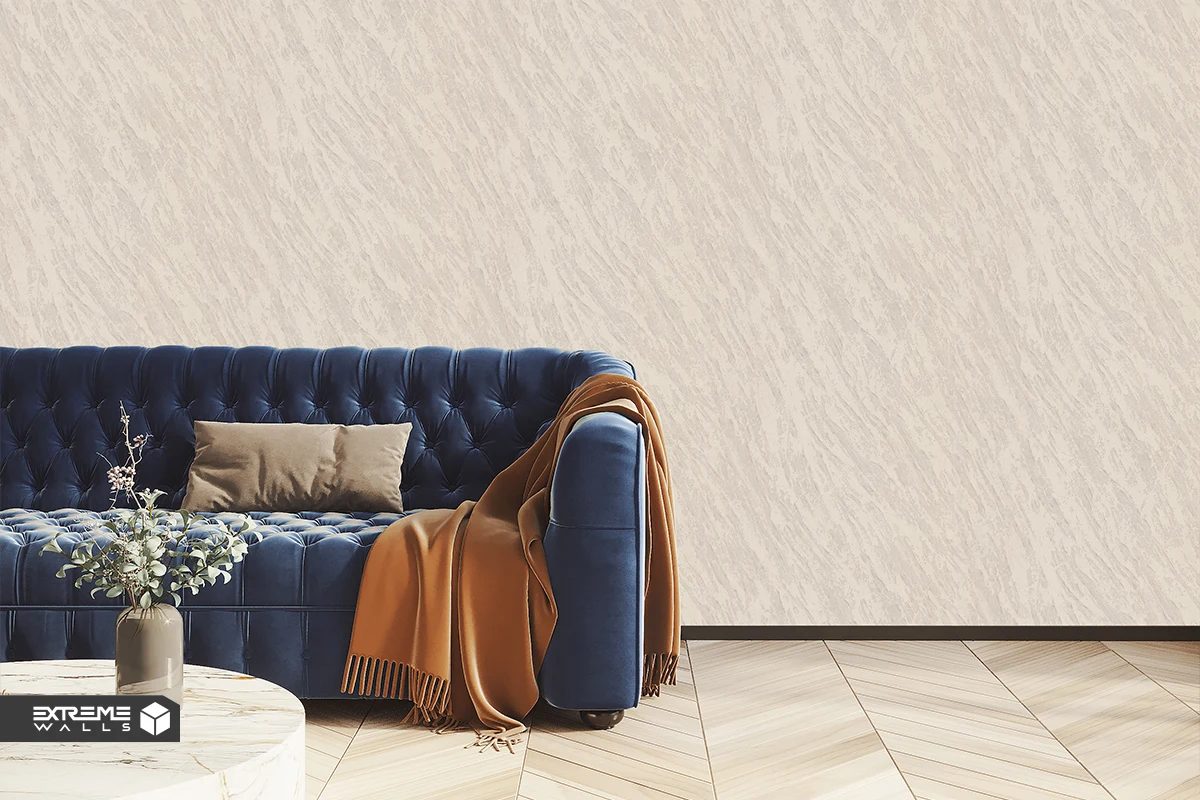
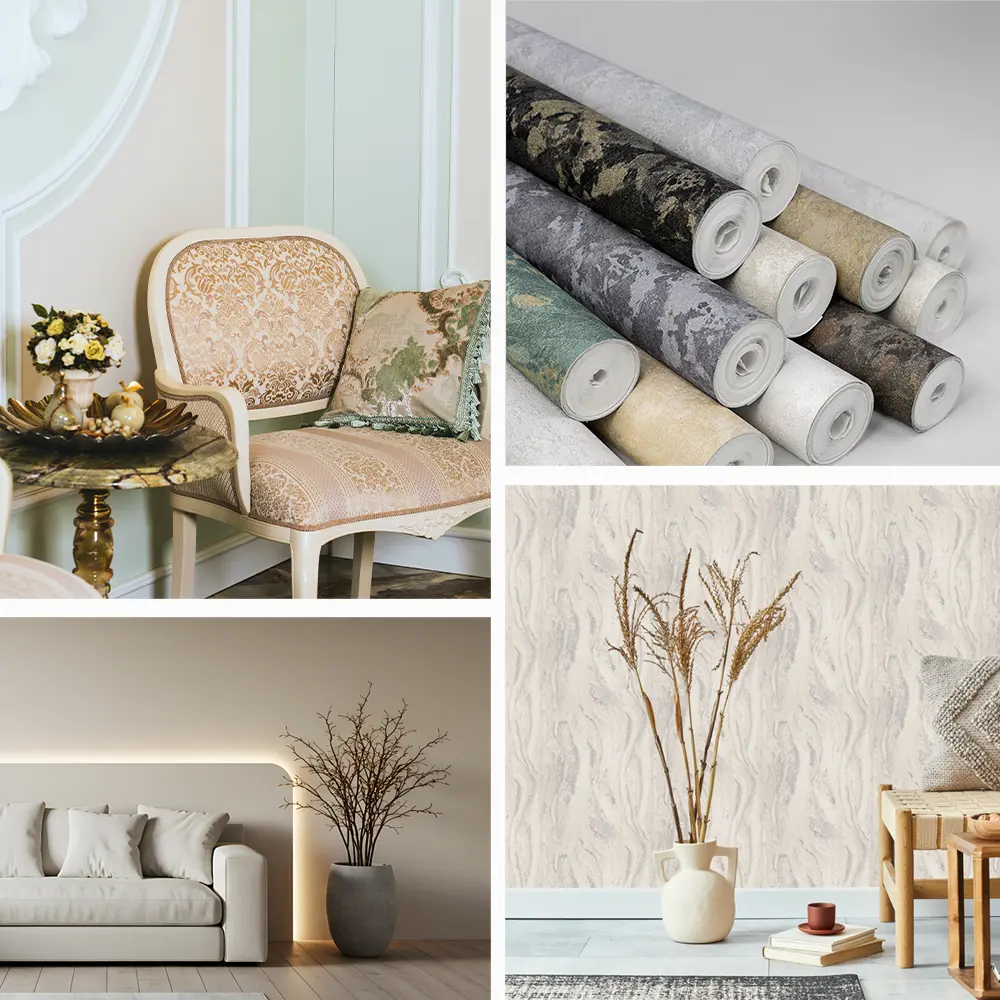
- In contrast, for larger, well-lit living rooms, bold patterns such as damask, floral, marble, stone, or brick effects can create a striking focal point and add visual drama.
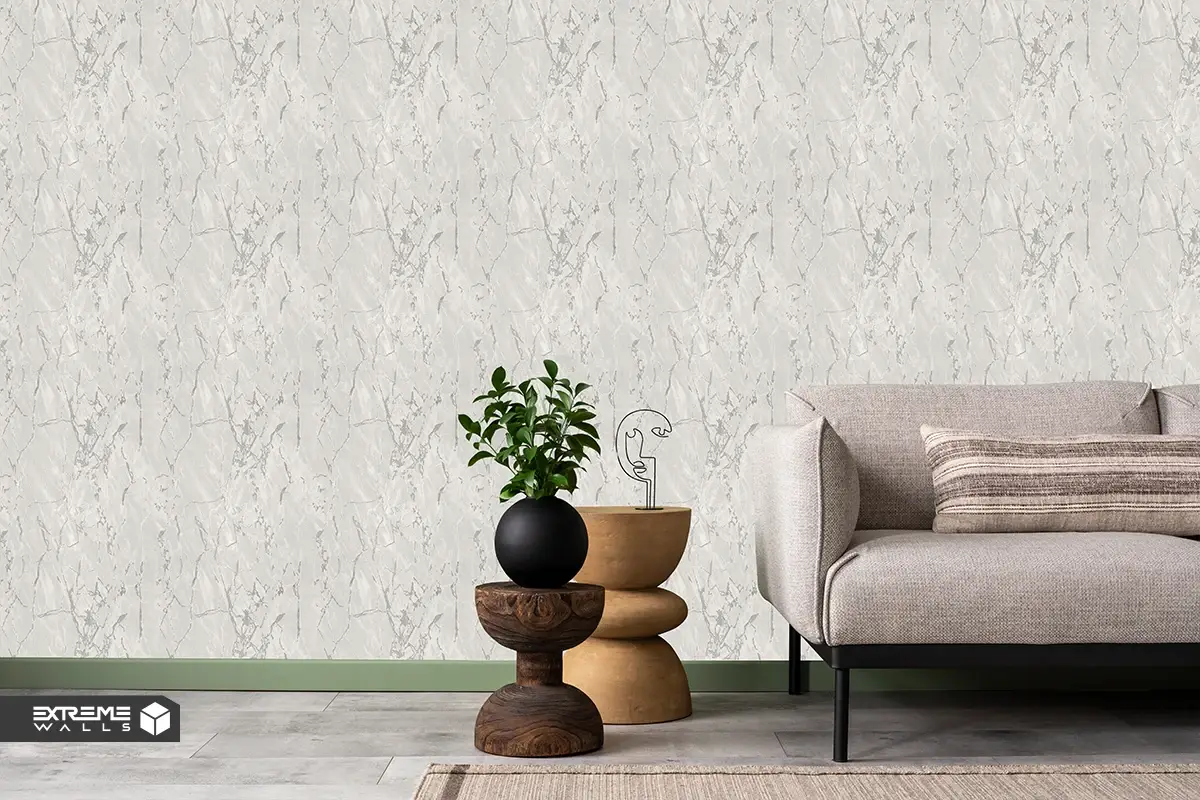
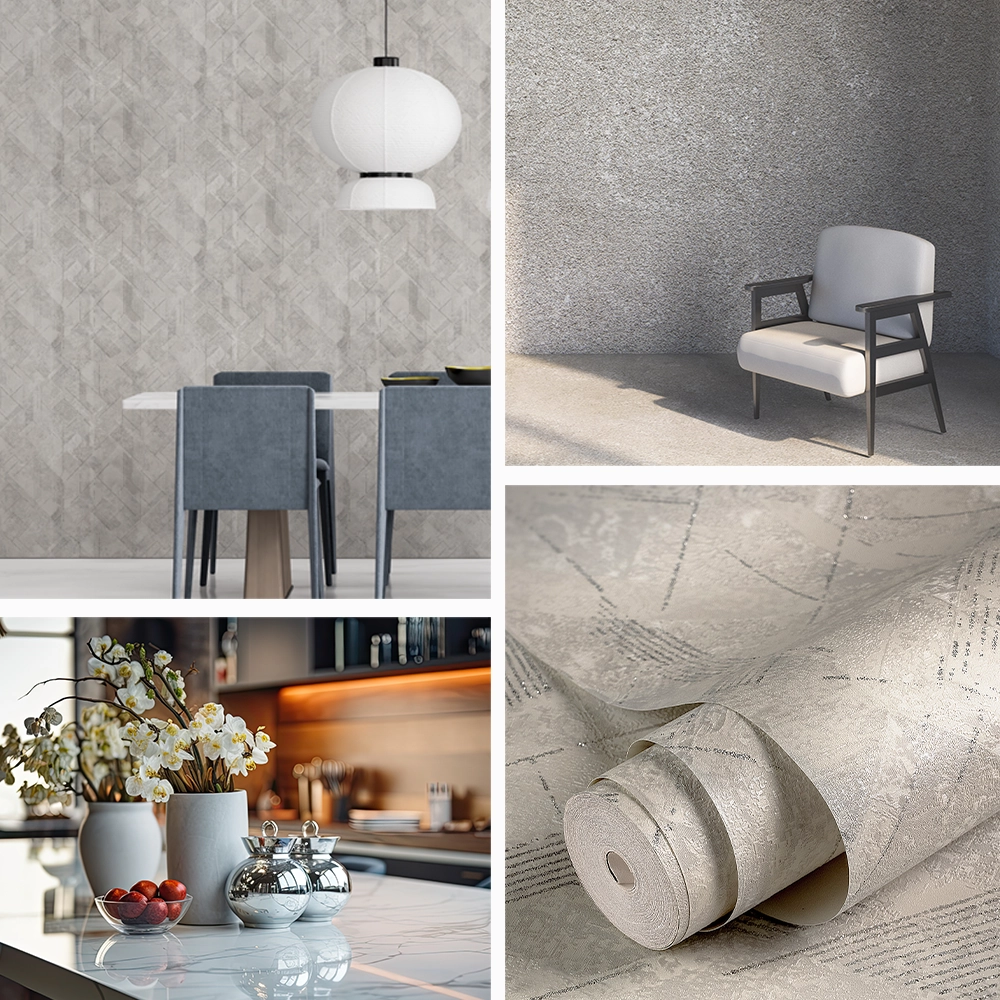
- Modern interiors often favor geometric, abstract, or industrial-inspired designs with linear or concrete textures — these deliver order and harmony while remaining understated. In classic and neoclassical interiors, damask, floral, and symmetrical botanical motifs bring an elegant and regal touch.
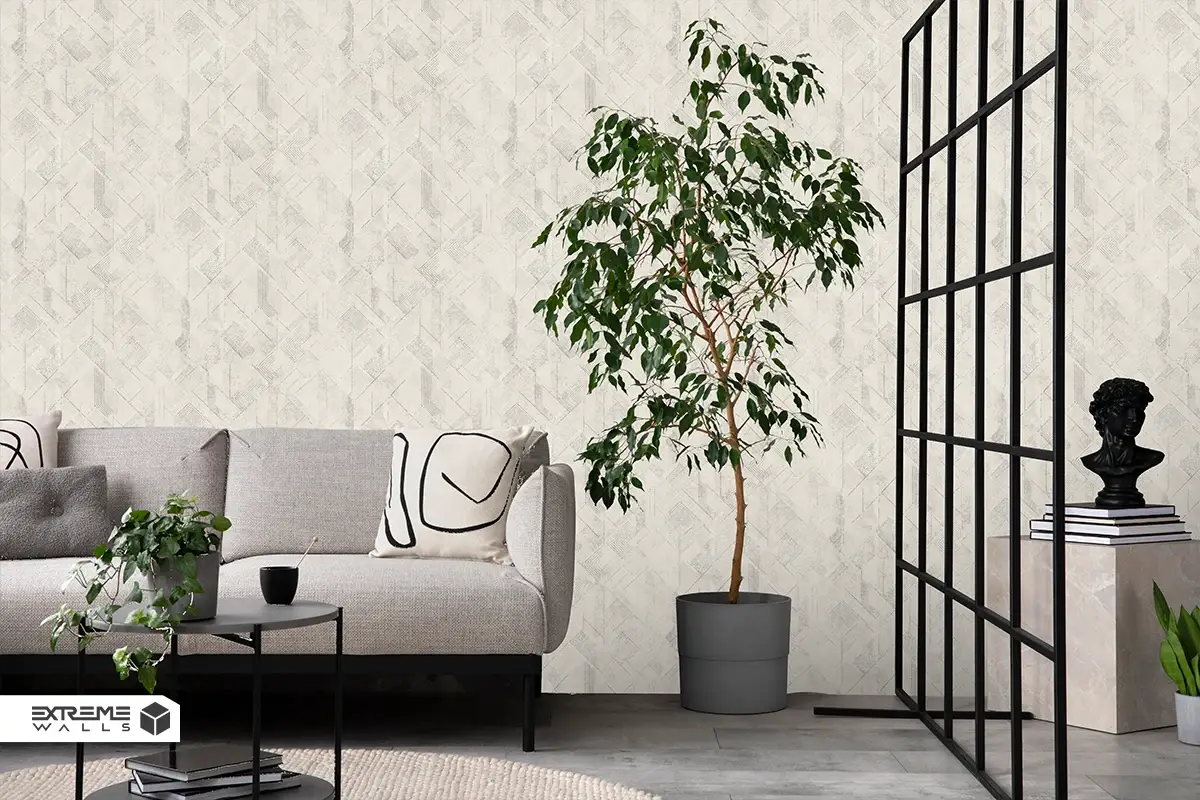
- Another key tip is to create an accent wall. Instead of applying bold designs to every wall, select one — such as behind the TV or sofa — for a standout pattern, while keeping the other walls simple. This contrast prevents monotony and draws attention to the right focal point.
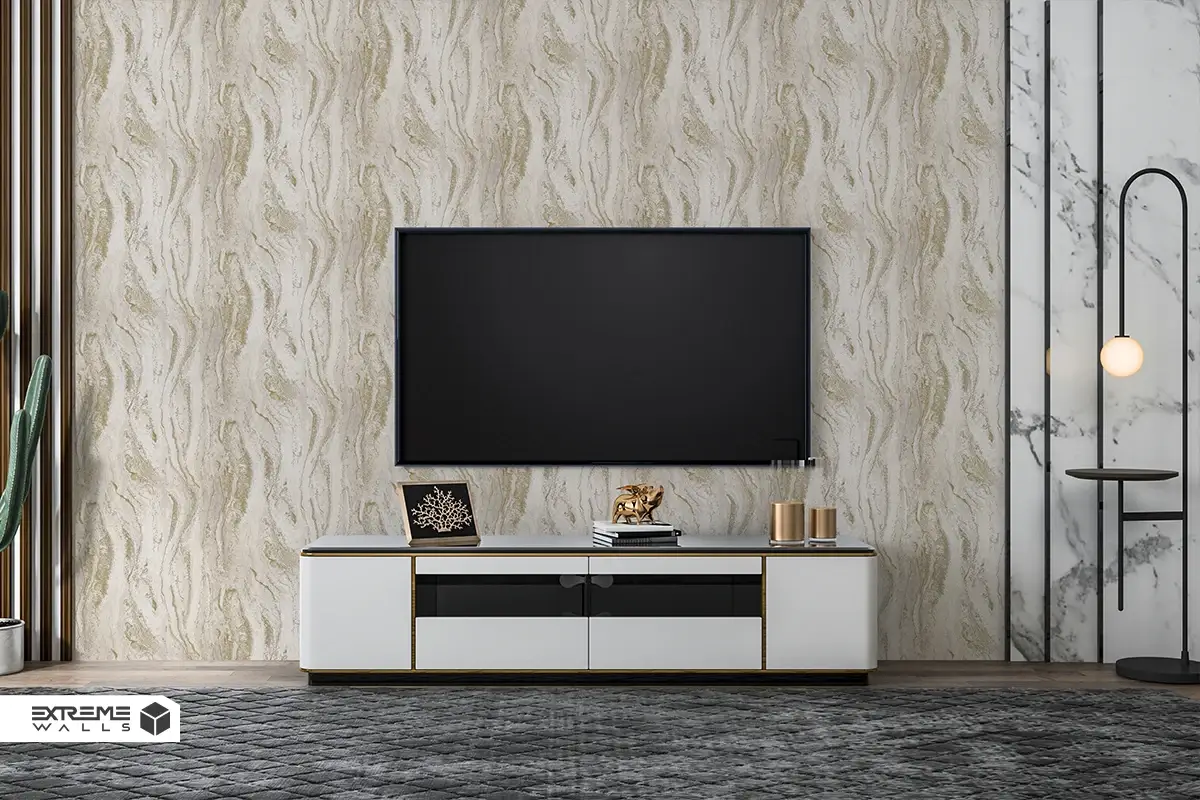
- If your décor incorporates natural materials like wood, stone, or plants, wallpapers with nature-inspired textures — wood grain, stone, or concrete — will enhance the organic feel. In modern or luxury spaces, metallic or shimmering wallpapers paired with strategic lighting can produce an eye-catching and glamorous effect.
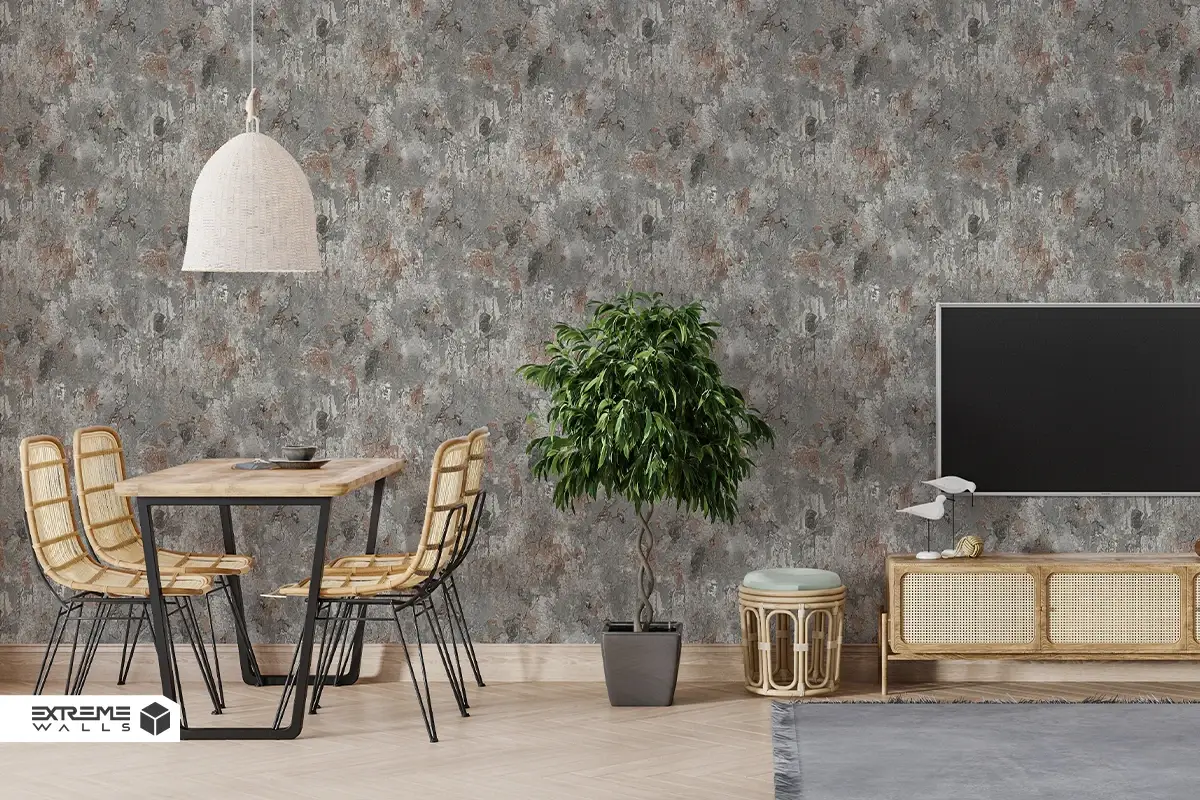
Choosing the Right Wallpaper Material
The material of your wallpaper plays a crucial role in its durability, maintenance, and appearance. Since the living room is a high-traffic area exposed to dust, touch, and temperature changes, it’s essential to select a quality, long-lasting material.
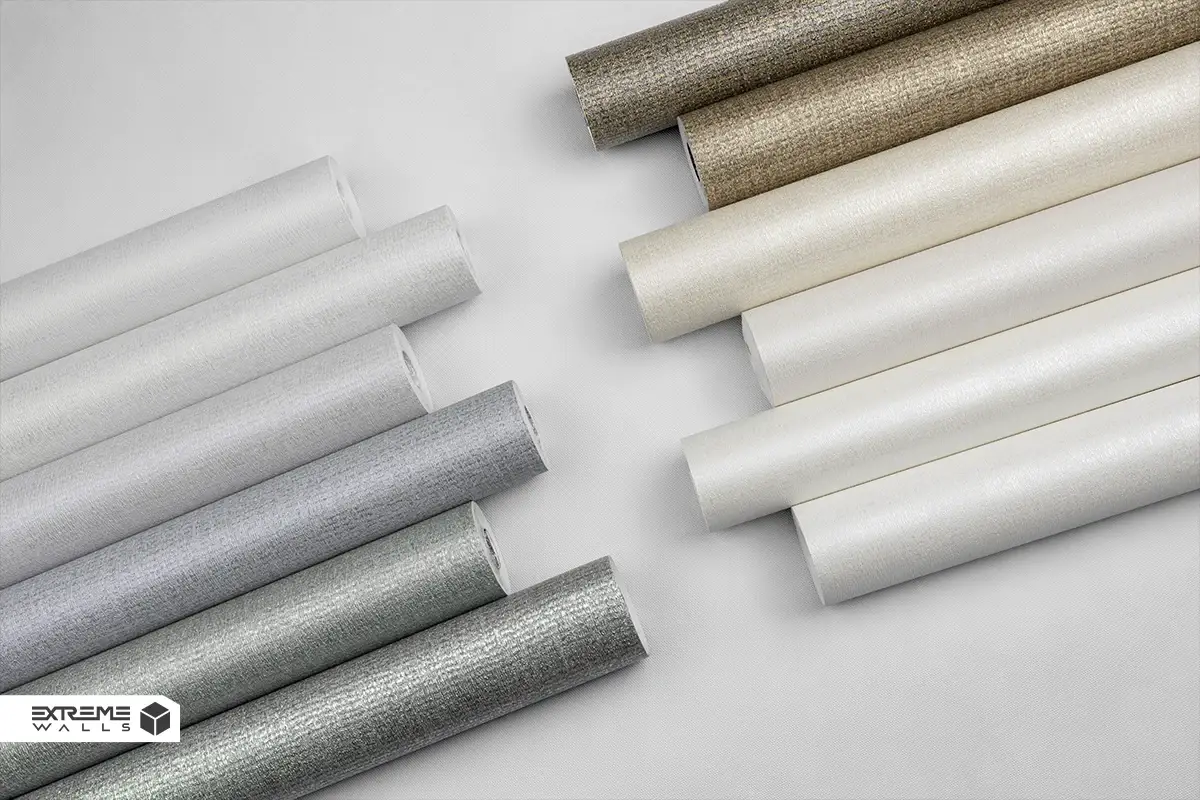
Among various types, vinyl (PVC) wallpapers are the best option for living rooms. Their vinyl-coated surface makes them washable, stain-resistant, and durable against scratches. They can easily be cleaned with a damp cloth and mild detergent, maintaining a fresh look for years.
Another major advantage of vinyl wallpaper is its longevity. It resists fading from sunlight, is highly durable against wear, and conceals minor wall imperfections thanks to its thickness — making it ideal for busy areas like living and dining rooms.
Matching Wallpaper with Your Interior Design Style
One of the most important principles in interior design is harmony between your wallpaper and overall décor style. A mismatched choice can disrupt the look, while a coordinated one creates a polished, professional result. Here’s how to match wallpaper with different interior styles:
- Modern Style:
Modern décor emphasizes simplicity, order, and bright colors. Textured, marble-effect, or subtle patina wallpapers work perfectly in this setting.
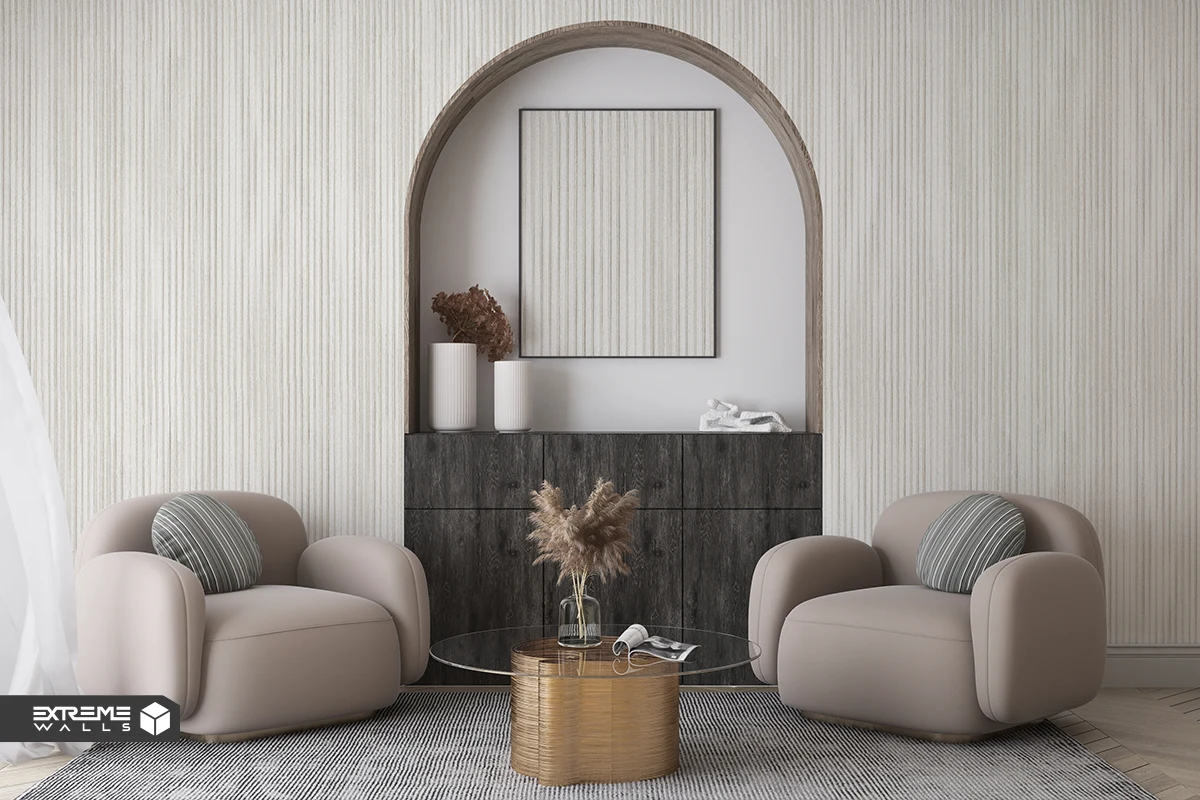
- Minimalist Style:
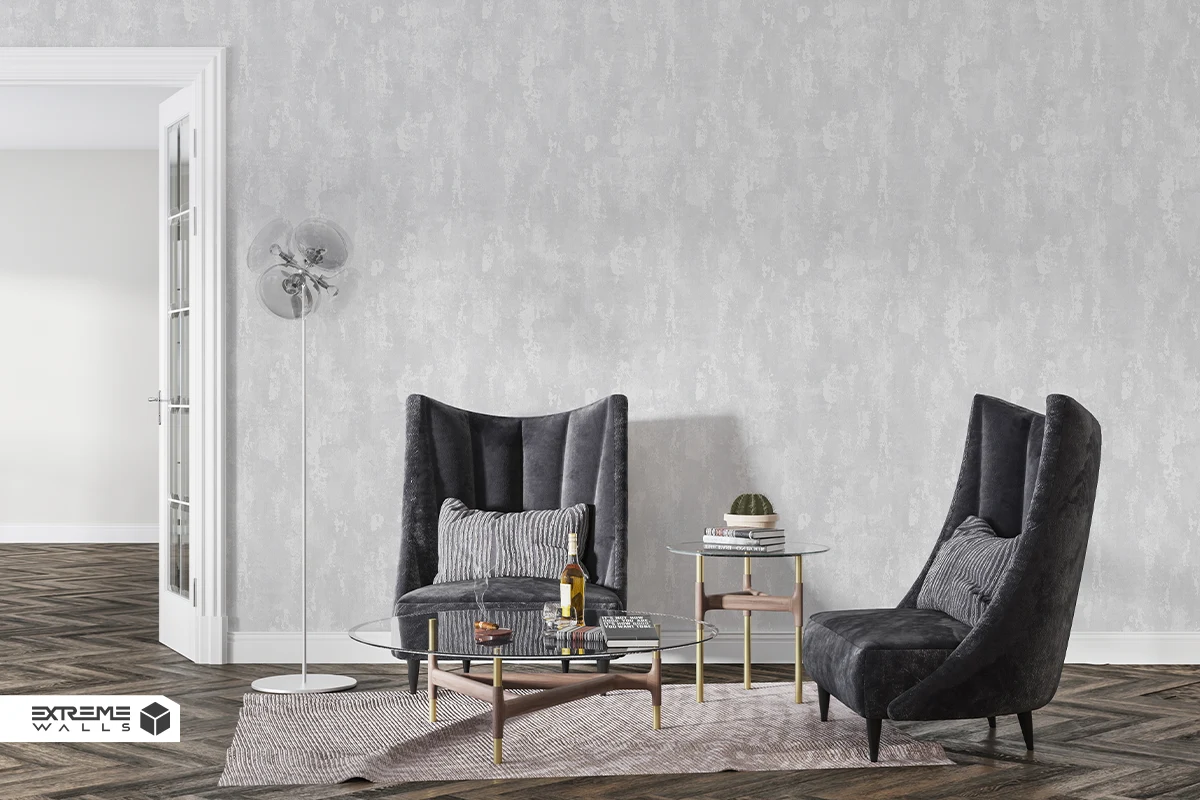
Minimalism focuses on calm and order. Choose completely plain or finely textured wallpapers in neutral tones such as white, beige, or soft gray.
- Neoclassical Style:
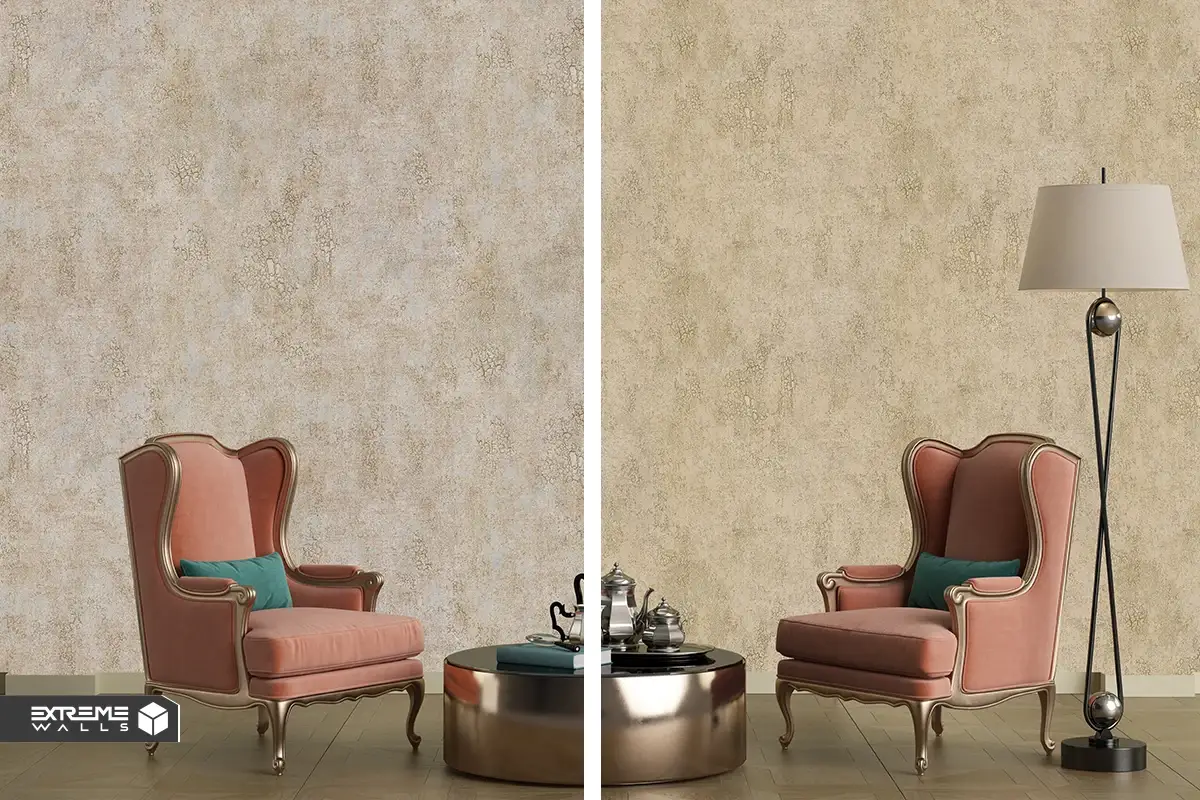
Neoclassical interiors blend classic elegance with modern simplicity. Refined damask patterns, gold accents, and tones of cream, beige, and champagne add sophistication without overwhelming the room. Metallic-accented wallpapers with embossed details are also popular in this style.
- Classic Style:
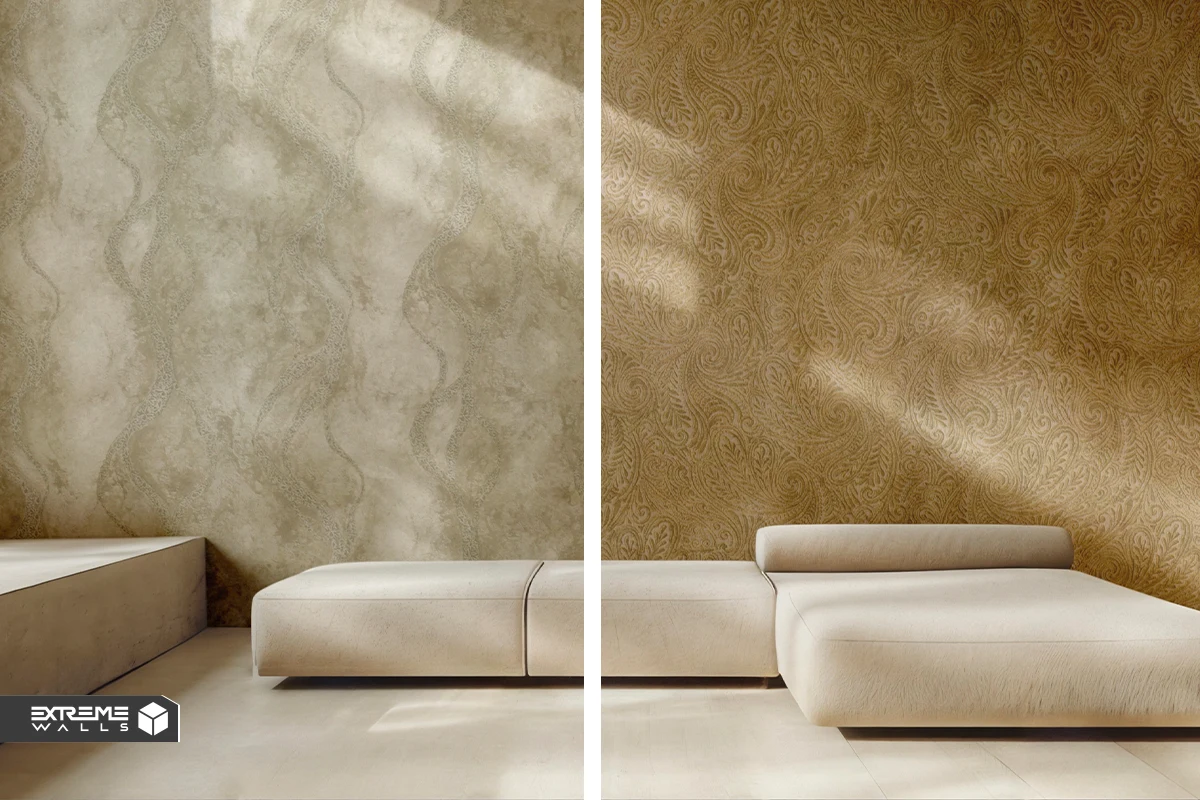
Traditional décor values symmetry, richness, and heritage patterns. Damask, floral, and ornate motifs in gold, olive, brown, burgundy, or navy shades convey a sense of opulence and timelessness.
- Postmodern Style:
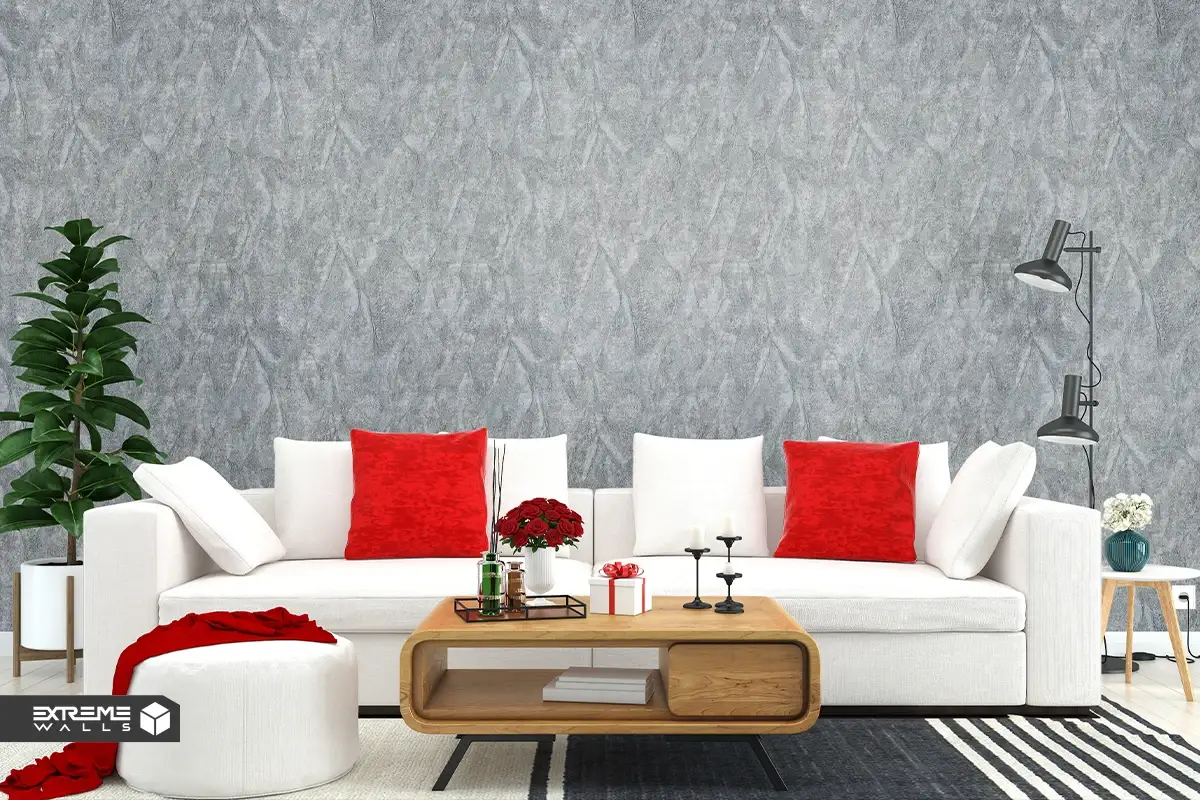
Postmodern design celebrates bold contrasts and creativity — mixing colors, shapes, and materials. Wallpapers with abstract lines, asymmetrical geometric patterns, or a mix of textures perfectly express this adventurous style.
Conclusion
Choosing the right wallpaper is one of the simplest yet most powerful ways to refresh your living room.
For advice on selecting or ordering your ideal wallpaper, contact Extreme Walls at +981499 for expert consultation.